
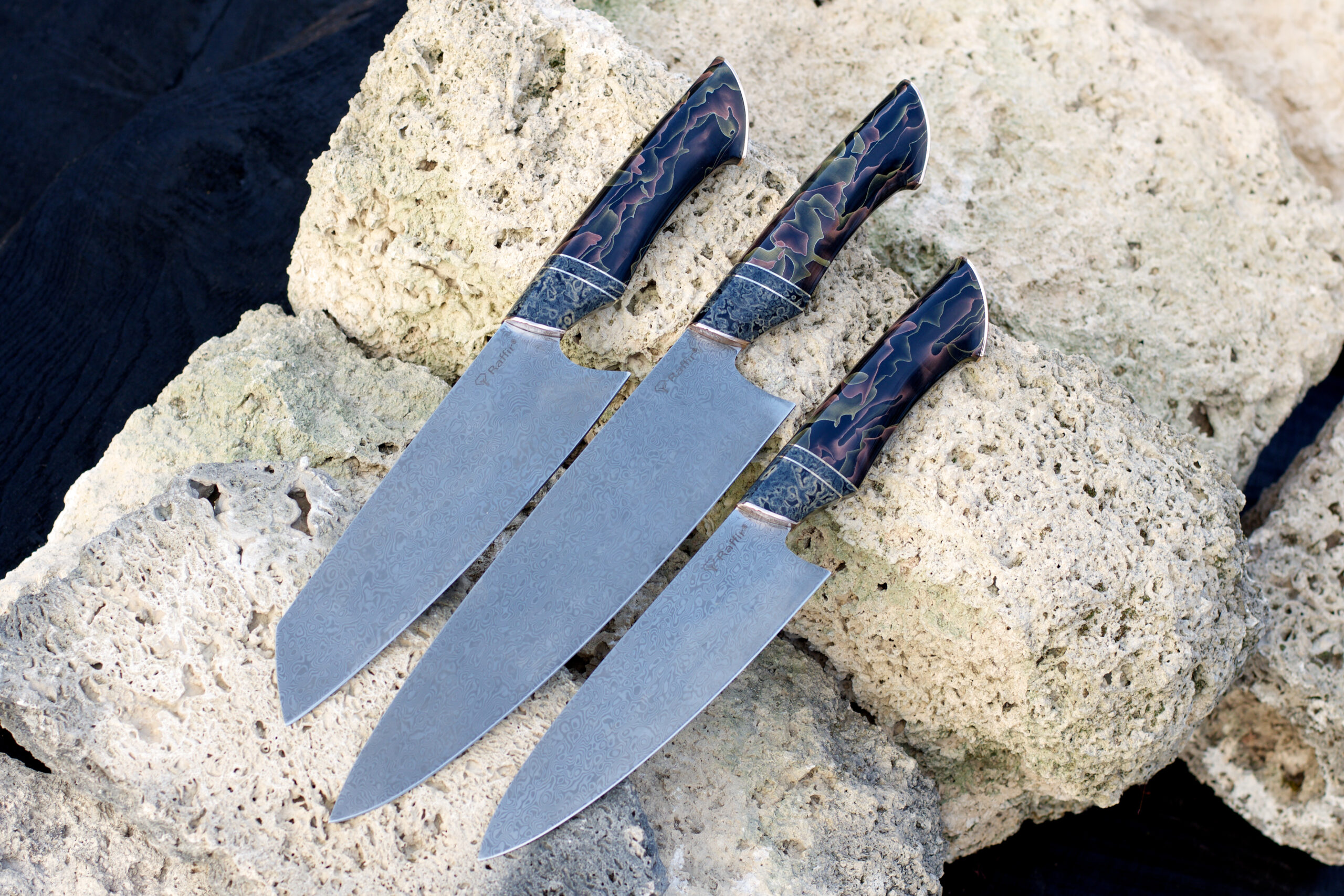
How to Choose Stabilized Wood for a Custom Knife Handle
Choosing stabilized wood for a custom knife handle involves more than selecting an attractive grain pattern. We should consider how the material looks, how it behaves during shaping and finishing, and how well it suits the knife’s intended use. RAFFIR develops stabilized materials by combining fine wood species with resin treatment, creating handle material designed for demanding, high-quality projects.
What makes stabilized wood suitable for knife handles?
Stabilized wood is natural wood that has been treated with resin through vacuum and high-pressure processing. This treatment fills parts of the wood structure and changes the material’s practical characteristics. Compared with untreated wood, it is described as harder, stronger, and more water resistant. These qualities are valuable when a knife handle must combine visual appeal with reliable everyday performance.
The material is also suitable for sanding, polishing, and CNC machining. That gives us flexibility when creating a handle with flowing contours, crisp details, or carefully matched scales. A maker can shape the material using the approach that best fits the project, while the finished surface can be polished to emphasize the wood’s natural character.
Start with the knife’s purpose
Before comparing species, define how the finished knife will be used. A hunting knife, chef’s knife, and display-oriented custom piece may each call for a different visual direction. For a working knife, hardness and water resistance may be especially important considerations. For a presentation piece, grain movement, color, and the relationship between handle and blade may lead the decision.
RAFFIR materials are used especially for knife handles, but they can also support other quality products such as jewelry, accessories, inlays, musical instruments, pool cues, fishing rods, eyewear products, and gun grips. This broad suitability reflects the importance of selecting a material according to both design and application.
Compare grain, color, and material performance
Once the use is clear, evaluate the wood’s appearance. Grain direction, figure, color variation, and the scale of the pattern all influence the character of a custom handle. A dramatic pattern can become the main visual feature, while a quieter grain may complement an elaborate blade without competing with it.
Our Raffir Wood range includes stabilized wood materials developed from fine species. Individual options can create distinctly different impressions. Curly birch, for example, may suit a handle where flowing figure is central to the design, while poplar-based materials can provide another visual direction. The best choice depends on the desired balance between blade, handle shape, fittings, and finish.
Match the material to the construction method
Think about the manufacturing process before ordering. If the handle will be shaped by hand, consider how much material must be removed and which surfaces will be exposed. If CNC machining is planned, review the required thickness, length, and width so the blank supports the complete design. Stabilized wood is suitable for sanding, polishing, and CNC work, but accurate planning still helps reduce waste and protect the intended grain orientation.
Also consider whether the handle uses scales, a full-tang construction, spacers, pins, or decorative inlays. These details affect the blank dimensions and determine how the pattern will appear after shaping. Drawing the handle outline on paper before cutting can reveal whether the most attractive part of the grain will remain visible.
Order with confidence and plan the final finish
Dimensions are a practical part of material selection. RAFFIR offers standard products and states that special dimensions can be produced for other purposes. If a project requires an unusual format, discuss the required dimensions and intended application before production. This can help align the material with the handle design and avoid unnecessary joins or compromises.
Finish planning matters as well. Sanding and polishing can change how light moves across the grain, so test the process on an offcut when possible. Keep the final surface consistent, especially across both handle scales. A careful finish allows the stabilized wood to provide the visual depth expected from a premium custom knife handle.
For makers selecting a complete design, the handle should also be considered alongside the blade. RAFFIR offers knife blades in Scandinavian design series developed with knife makers, hunters, and professional chefs. Coordinating blade proportions with the handle material can produce a more balanced result.
In conclusion, the right stabilized wood combines a suitable appearance with the hardness, strength, water resistance, and workability required by the project. Start with the knife’s purpose, compare grain and color, plan machining and finishing, and confirm the required dimensions. With that method, we can choose stabilized wood that supports both the performance and the individual character of a custom knife handle.


