
How to Select Premium Knife Blades for Custom Builds
Selecting premium knife blades is an important decision when we create a custom knife. The blade influences the knife’s function, proportions, appearance, and the way the finished handle feels in use. A thoughtful choice starts with the intended purpose and continues with steel construction, blade shape, dimensions, and material coordination.
Start with the knife’s intended purpose
Before comparing individual blades, we should define how the finished knife will be used. A hunting knife, chef’s knife, dining knife, and general custom knife each require a different design direction. The blade should support the task while also giving the maker enough room to develop a balanced and coherent build.
Match the blade to the user
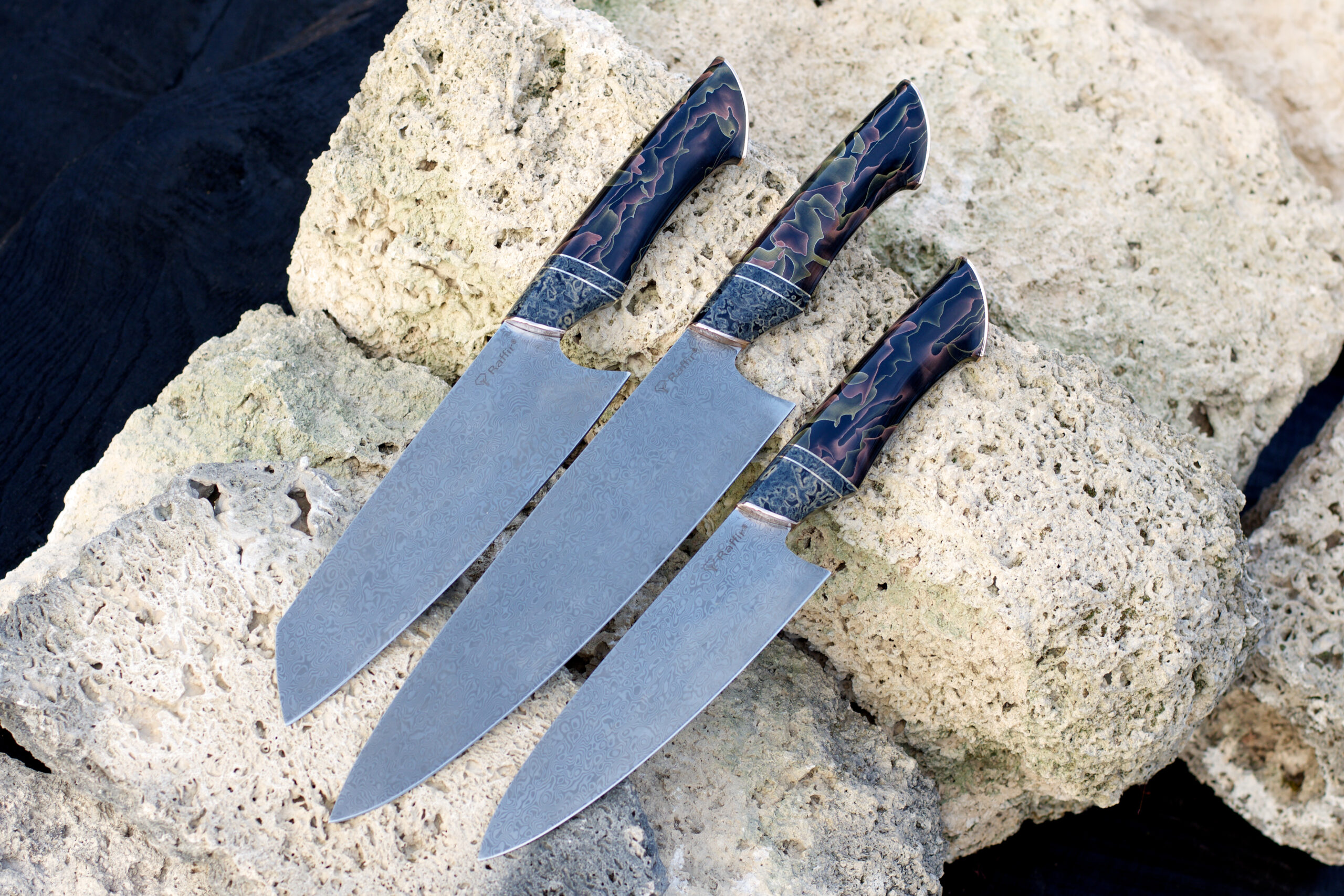
For kitchen projects, a chef’s blade, bread knife blade, chopper blade, small chef’s blade, utility blade, or vegetable knife blade may be appropriate. RAFFIR’s Scandinavian Chef series uses solid stainless Damascus steel and is designed for professional kitchen applications. For outdoor projects, Scandinavian Hunter includes hunting knife models such as Rohde, Astrup, Rahbek, Mikkelsen, and Molzen.
Dining knives call for another approach. The Scandinavian Dining range includes steak knife blades and sets with either 67-layer Damascus steel or three-layer steel with a VG10 core. Choosing the correct category early helps us avoid compromising the final design.
Evaluate steel, shape, and construction
Damascus steel is often selected for its distinctive pattern, but appearance should be considered together with construction and purpose. We should examine whether the blade is made from solid stainless Damascus steel or uses a layered construction with a VG10 core. These details affect the visual language of the knife and help determine which handle materials will complement it.
Blade geometry also matters. Consider the overall length, profile, spine, edge line, tang arrangement, and intended grip. A refined blade should leave sufficient space for the handle design without making the finished knife feel visually heavy. We should also check that the chosen dimensions suit the planned scales, bolsters, pins, and any decorative elements.
Plan the complete composition
A custom build works best when every component supports the same concept. Light, dark, figured, and fossil-based handle materials can create very different results beside a Damascus pattern. Stabilized wood is treated with resin through vacuum and high-pressure processing, making it harder, stronger, more water-resistant, and suitable for sanding, polishing, and CNC machining. Explore stabilized wood materials when durability and natural character are central to the design.
For a more distinctive appearance, stabilized mammoth fossils can introduce authentic material history and unusual texture. These materials include mammoth tusk, molar, and bone, treated with resin for practical use in quality products. The handle should not compete with the blade; instead, its color, grain, and pattern should frame the Damascus design.
Build with precision and long-term use in mind
Once we have selected the blade, we should confirm the practical requirements of the build. Measure the handle material carefully, allow enough material for shaping, and plan the transition from tang to scales before cutting. Accurate planning reduces waste and makes it easier to preserve the strongest and most attractive areas of a natural material.
We should also consider how the knife will be finished. Polishing, edge refinement, and precise fitting can significantly influence the final impression. Materials that are suitable for grinding, polishing, and CNC work give makers flexibility, but the chosen process should always match the specific material and design.
Special dimensions may be relevant when a standard component does not fit the project. RAFFIR offers materials in custom dimensions for applications beyond standard sizes, which can support unusual handle concepts and other quality-product designs. For a complete blade overview, compare the available premium knife blades by series and intended use.
The best custom knife begins with a blade that fits both the task and the maker’s vision. By comparing steel construction, blade geometry, dimensions, and handle compatibility, we can select premium knife blades that provide a strong foundation for a durable, balanced, and visually coherent result.


